Manolo Santana: The Pioneer Who Put Spanish Tennis on the Map
Long before Spain became a byword for clay-court excellence, tennis in the country was a niche pursuit with almost no international pedigree.
Before Nadal, Ferrero, or Muguruza, There Was a Madrid Ballboy Who Changed Everything
Long before Spain became a byword for clay-court excellence, tennis in the country was a niche pursuit with almost no international pedigree. That changed because of one man: Manolo Santana, a working-class kid from Madrid who started out retrieving balls at a local club and ended up as the first Spaniard to reach the top of the sport. His story isn't just biography — it's the origin point for the entire ecosystem of Spanish academies, federations, and tournaments that exists today.
Manuel Santana
Spanish tennis player (1938–2021)
Manuel Santana Martínez, also known as Manolo Santana, was a Spanish tennis player.
Santana's breakthrough came at the French Championships, where he became the first Spanish man to lift a Grand Slam singles trophy. He would go on to win that title a second time, cementing himself as one of the finest clay-court players of his generation. But what set him apart from other Continental European stars of the era was his refusal to be pigeonholed as a clay specialist. He proved his game translated to faster surfaces by winning the US Championships on grass, and then, most remarkably, capturing the singles title at Wimbledon — becoming the first Spaniard ever to do so on the sport's most storied lawns.
A Complete Game, and a Nation's First Real Contender
What made Santana so influential wasn't only his trophy count but the versatility behind it. Clay-court success is often built on patience and defense; grass rewards serve-and-volley aggression. Santana mastered both, built around exceptional touch, anticipation, and one of the most respected backhands of his generation. He also became the face of Spain's push in the Davis Cup, leading the national team to a final appearance against Australia — a result that, at the time, was almost unthinkable for a Spanish squad and helped legitimize tennis as a serious pursuit back home.
He didn't just win on clay — he proved a Spaniard could win anywhere, on any surface, against anyone.
Why His Name Is Still on the Stadium Wall
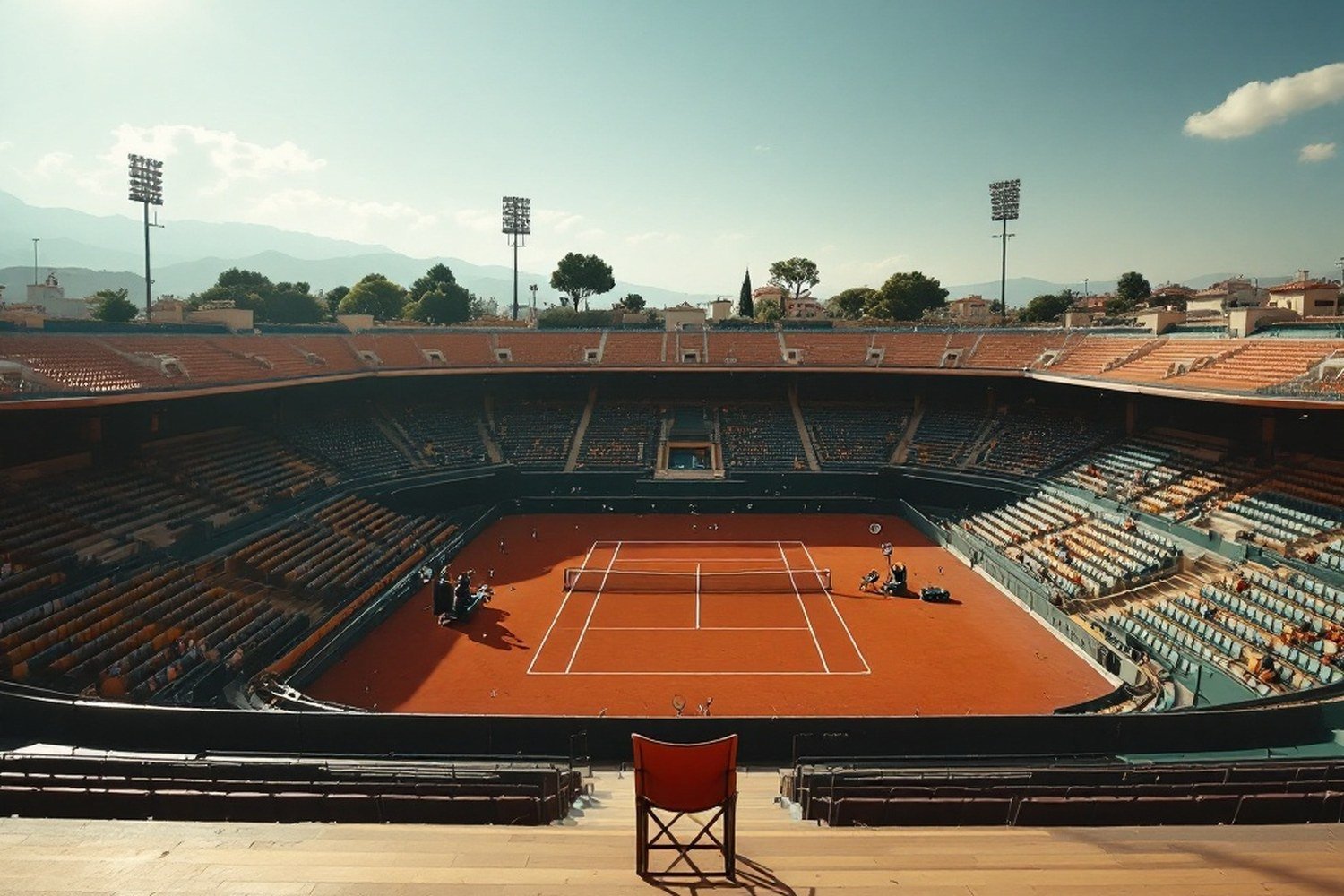
Santana's impact didn't end when he retired from competitive play. He went on to captain Spain's Davis Cup team and later became tournament director of the Madrid Masters, shaping the event into what is now the Mutua Madrid Open. Today, the tournament's main show court at the Caja Mágica carries his name — the Manolo Santana Stadium — a permanent reminder for every player walking onto that court of who came first.
For coaches and academies across Spain, Santana's career remains a useful teaching reference: his success came from all-court adaptability rather than surface specialization, a principle many Spanish development programs still emphasize when training juniors on multiple surfaces rather than clay alone.
The generations that followed — from Manuel Orantes through to modern champions like Rafael Nadal and Garbiñe Muguruza — inherited a domestic infrastructure of clubs, federations, and fan interest that simply didn't exist before Santana's rise. The Real Federación Española de Tenis points to his career as the founding chapter of Spain's modern tennis identity. For anyone training, coaching, or following the sport in Spain today, it's worth remembering that the depth of talent now taken for granted traces back to one player who insisted Spanish tennis belonged on every surface, not just the clay he grew up on.